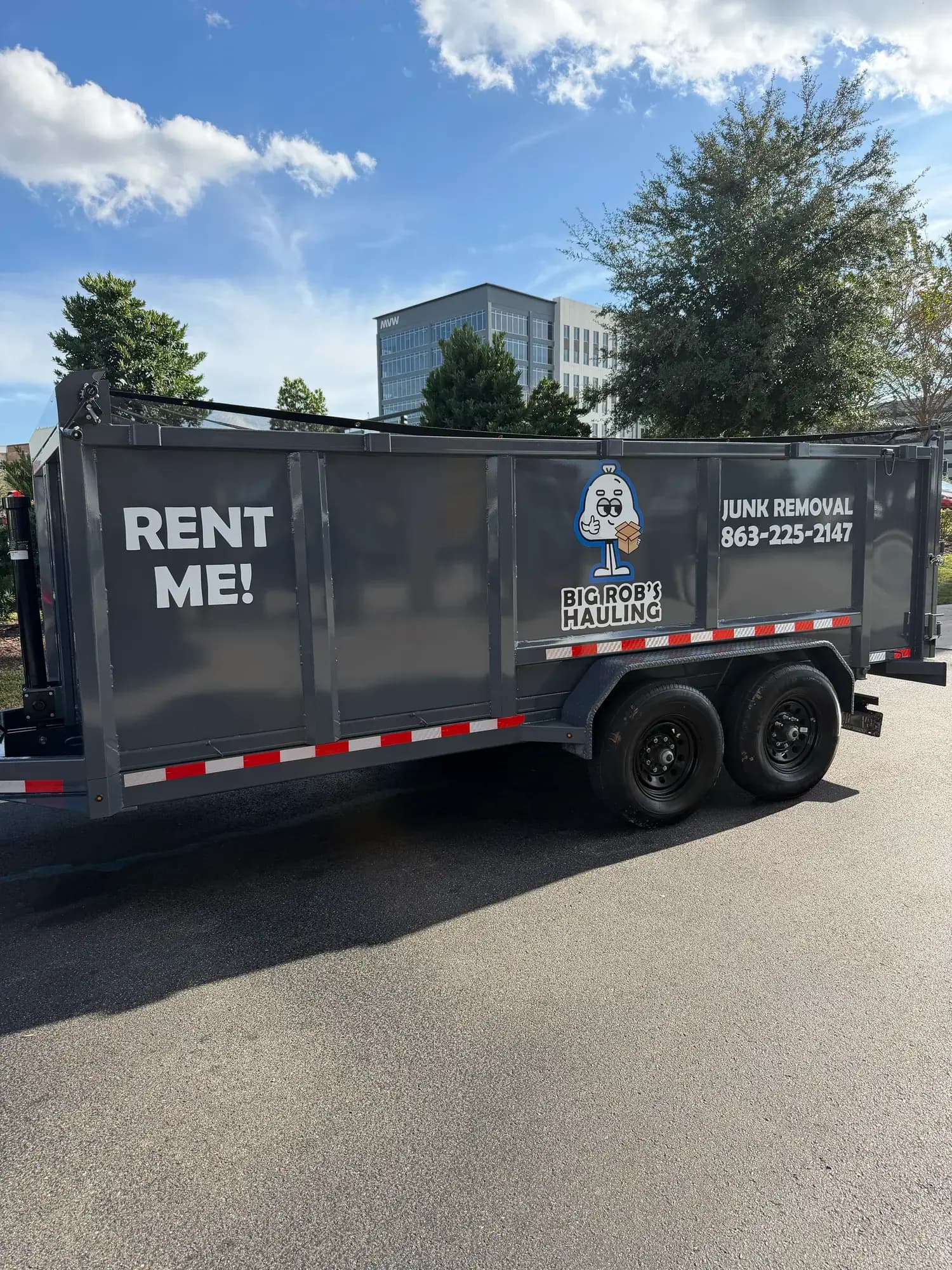
When a dump trailer wins
Garage and house cleanouts, a deck tear-out, a kitchen or bath remodel, storm debris, a shed coming down. Anything under about 16 yards where the box has to reach a driveway, a side yard or a wooded lot. The trailer gets there behind a pickup, which means the same driveway your car uses, and it sits on tires, so the pavers stay put.
It also fits neighborhoods that don't love dumpsters. To the HOA it reads as a trailer parked in a driveway for three days, which is a different conversation than a steel box at the curb for a week.
When a roll-off wins
Heavy material by the ton. Concrete, brick, dirt, a full roof of shingles: a heavy-debris roll-off is built for that weight and a dump trailer isn't. Big volume is the other case. A whole-house gut or a commercial build-out that fills a trailer every day is a roll-off job, and the roll-off company will swap a full box for an empty one on a schedule.
If you have no driveway and the only spot is the street, that's a roll-off too, though it can need a right-of-way permit. Check with the city or county before it's dropped.
What to ask either company
How many days are included, how many tons, and what each extra one costs. Whether the dump fee is inside the price. What can't go in the box. Where it will sit and what protects the surface under it. The answers are what you're comparing; the shape of the box is secondary.