When an estate sale company wins
Call a sale company when the house has furniture, tools, collections or a garage full of things a stranger would pay for. The industry runs on commission: the company earns when items sell, so they price, stage and advertise, and you get what's left after their cut. Read the contract for what happens to unsold items, since some companies charge separately to haul them. Plan on weeks, not days, and a house that's still partly full when the sale ends.
When a cleanout crew wins
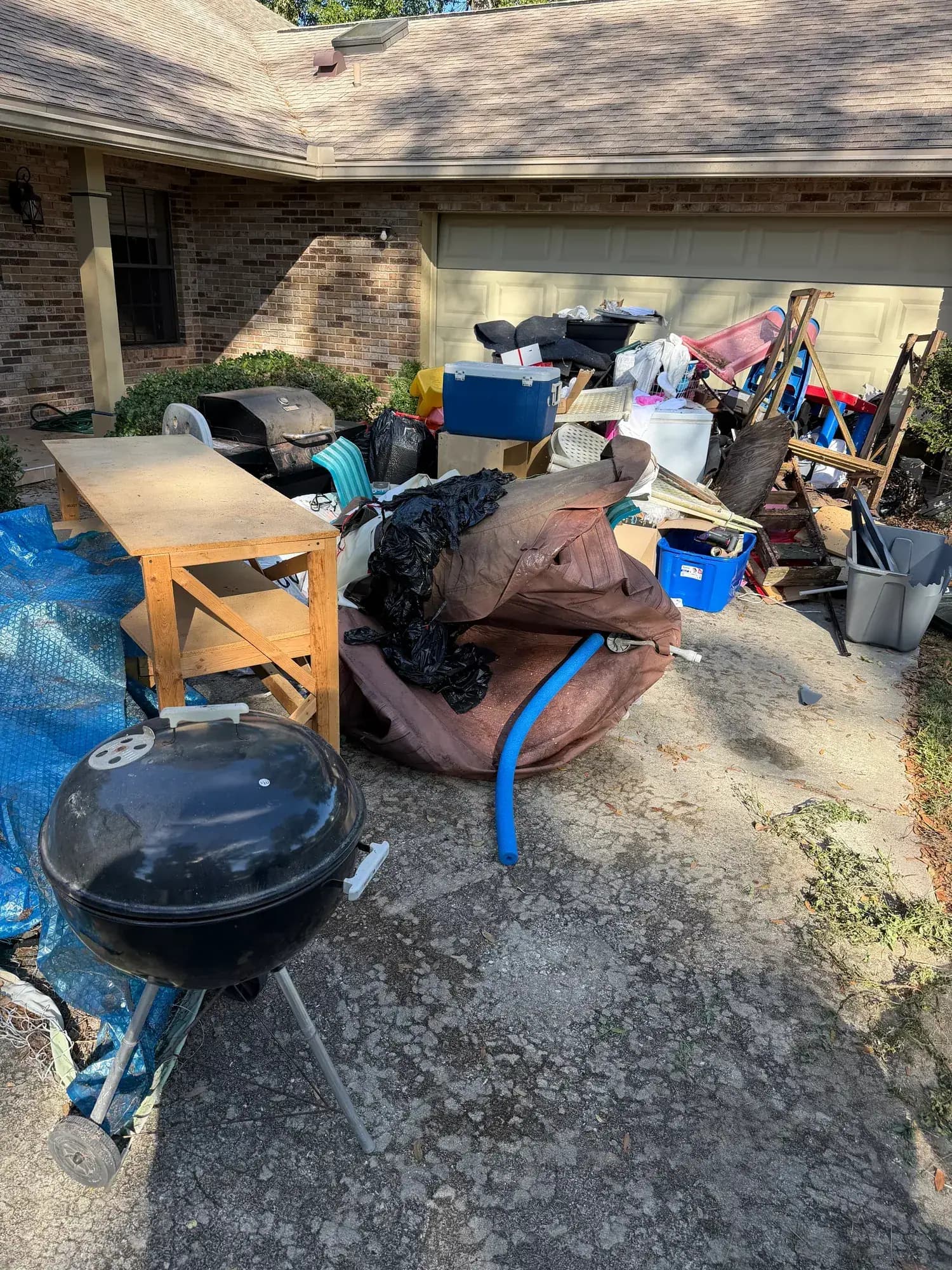
Call the cleanout crew when the deadline is real. A listing date, a closing, a landlord's inspection, or a family that's flown in for four days. Rob walks the house with you, counts trailer loads, and quotes flat: $350 for a half trailer, $525 for three-quarters, $700 for a full. The crew pulls donation-worthy items aside as they load where it makes sense, sets aside anything that looks personal, and leaves the rooms empty. Most Polk County houses clear in a day; the fullest take two, and Rob says which before he starts.
When a donation pickup wins
Call for a donation pickup when the good furniture is still good and nobody in the family wants it. The Salvation Army schedules free pickups, and their site lists what they won't take, like damaged appliances and old televisions, so read the list before you book. It's a truck slot, not a cleanout; the driver takes what's accepted and leaves the rest. It costs nothing and it's the right home for a sofa that still has years in it.
The order that works
Sale first if there's value, donation next for the good pieces that didn't sell, cleanout last for everything else. Doing it in that order means the cleanout crew hauls less, so the load count drops and so does the number. Skipping straight to the cleanout is fine when there's nothing worth selling; just say so, and tell Rob what to set aside.